Natto in a sous vide bath
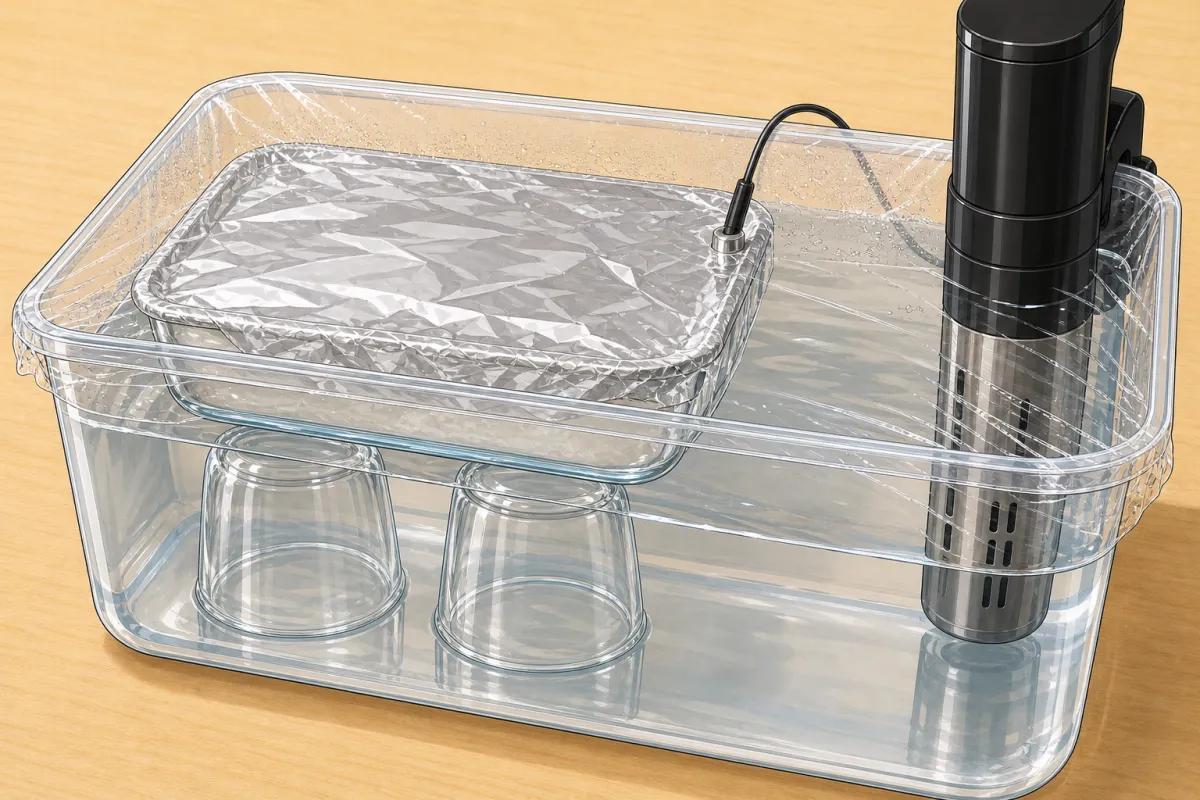
Natto is soybeans fermented by Bacillus subtilis var. natto, the spores in your packet. The beans have to be cooked very soft, inoculated while they are still hot, then kept warm, damp and with some air for about a day. A sous vide circulator holds the heat. Stand two upturned glasses in the bath, set the glass baking dish on them so the water warms it from below without getting in, and cover the whole bath. Then a day in the fridge, when the stringiness and flavour develop. Small "natto" soybeans give the classic result; ordinary soybeans make bigger, firmer natto.
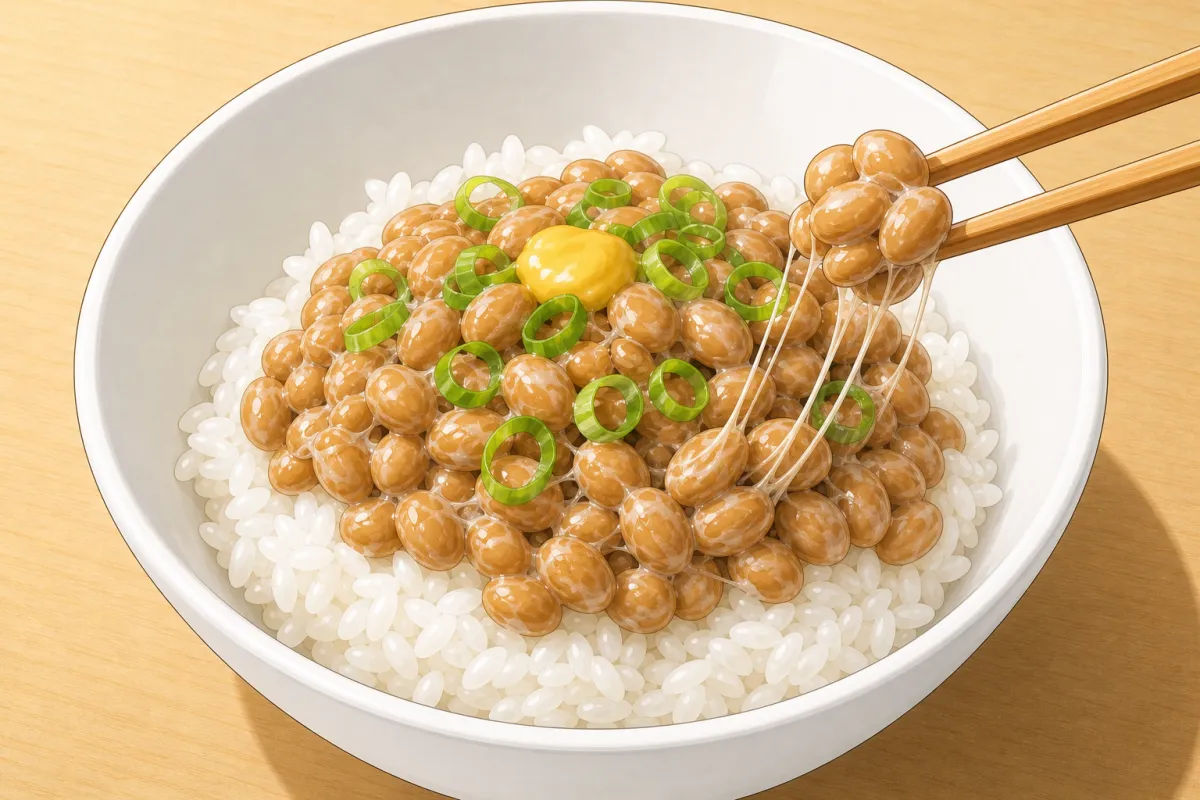
Mise en place — set out in the order it goes in
 Soybeans300 g dry, rinsedStep 1
 Spores1 scoop in 1 tbsp boiled waterStep 3
 To serve
- soy
- karashi
- scallion
Prep order — what happens when, and what overlaps
h:mm
0:0012:0024:0036:0048:0060:0072:00
Soak (overnight) 15 h
Steam until crushable 1 h
Spores in, into the dish 10 min
Bath at 41°C, covered (22–24 h) 23 h
Cool, then fridge (24 h) 24 h
Hands-offPan / stoveBowl / counterWater bath
Start the soak the evening before. The natto is first eaten on the third evening.
Step by step
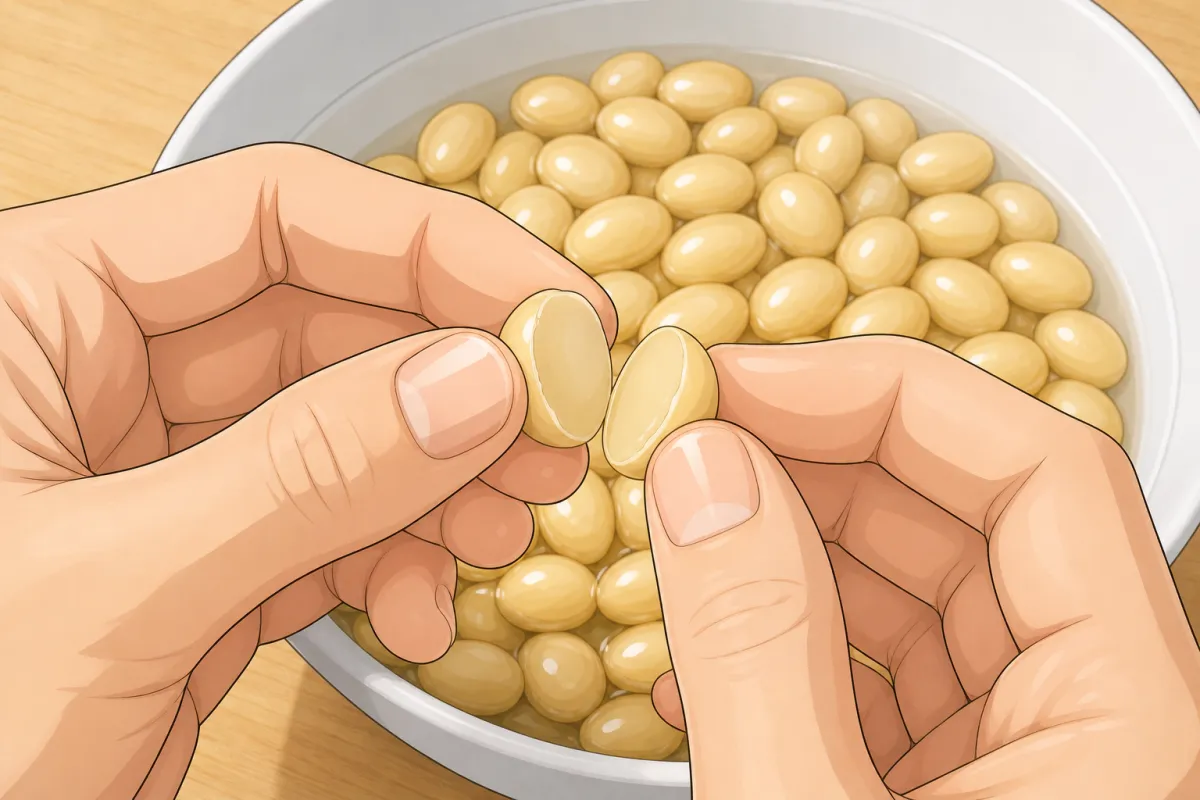
Soaked, a bean splits into two flat halves with no dry core. 1Soak overnight
12–18 hFor this step
- Dry soybeans300 g
- Waterfor soaking and steaming
- Rinse the soybeans, then cover them with three times their volume of cold water.
- Soak 12–18 hours. They roughly double, and a bean splits cleanly into two flat halves with no dry core.
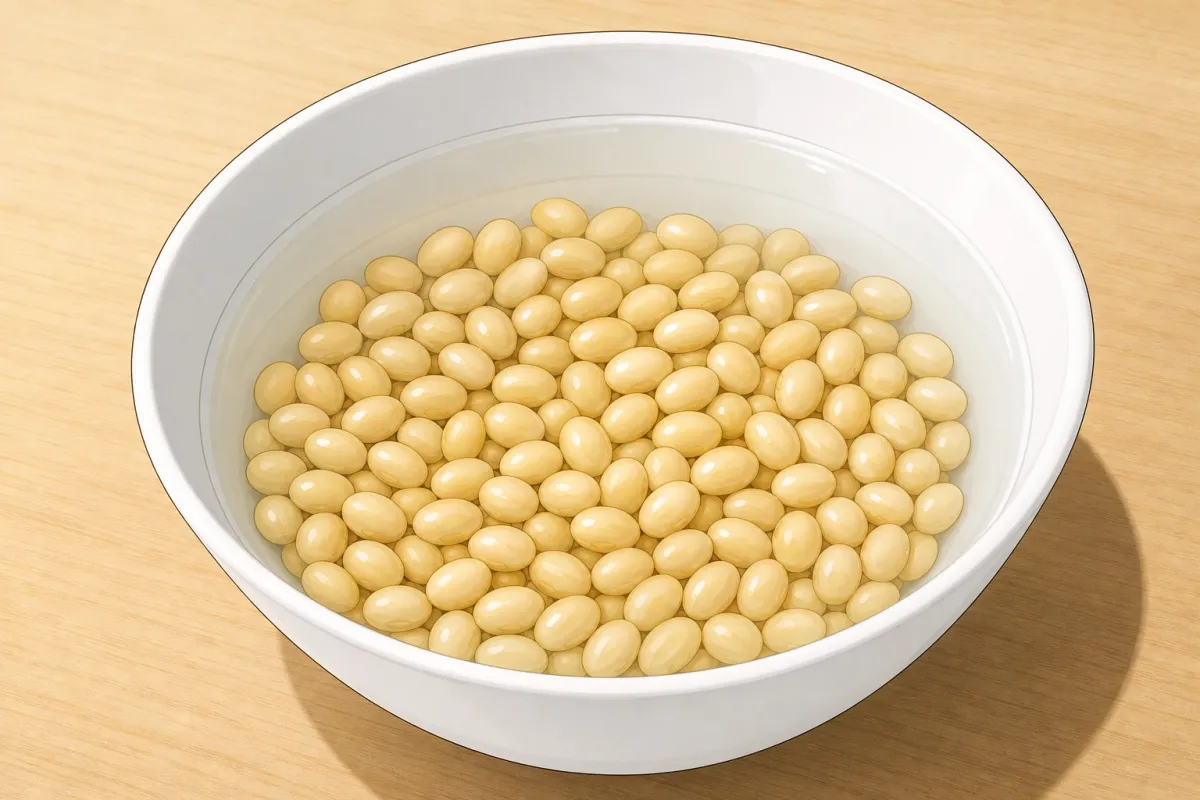
Should look like this 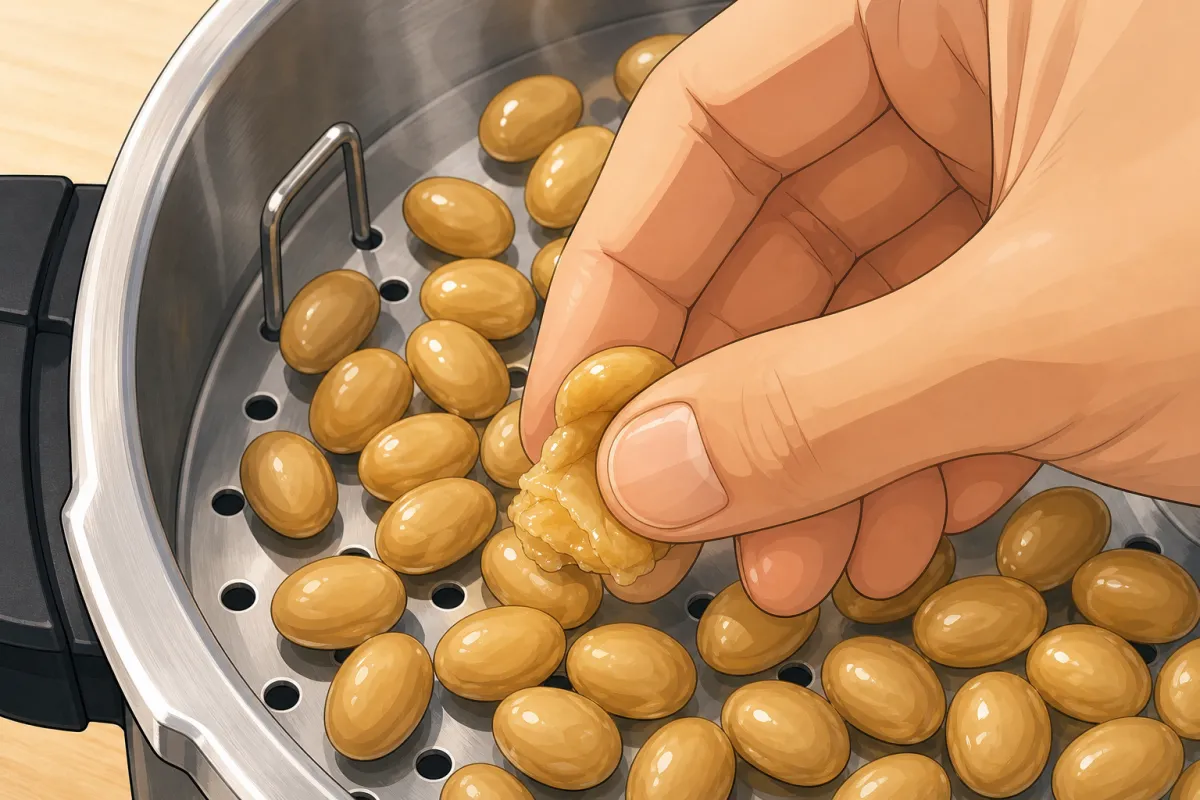
It should crush with almost no effort between thumb and ring finger. 2Steam until very soft
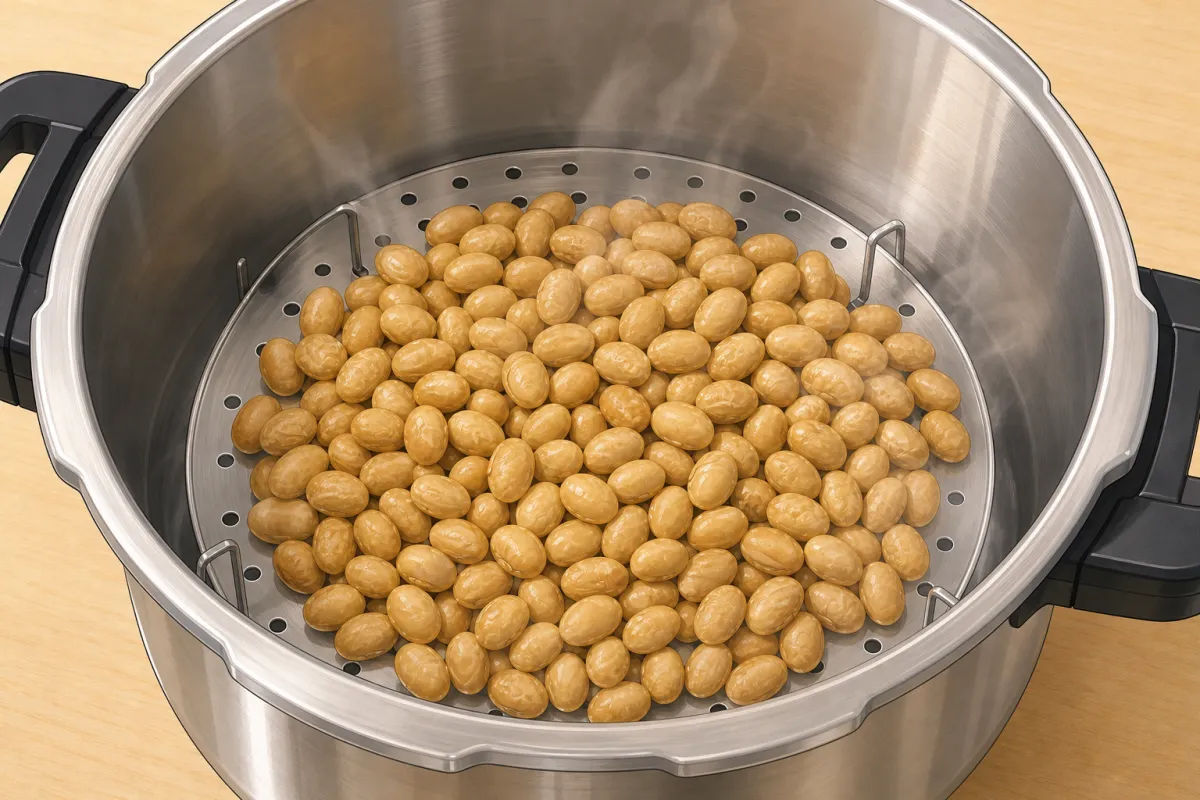
high40 min – 5 h- Drain. Pressure cooker: beans on the steamer rack over about 2 cm of water, 40 minutes at high pressure, then let the pressure drop on its own.
- No pressure cooker: simmer them in plenty of water for 3–5 hours, topping up so they stay covered.
- Test one: it should crush with almost no effort between your thumb and ring finger, like a cooked chestnut. Firmer beans make weak, dry natto.
Should look like this 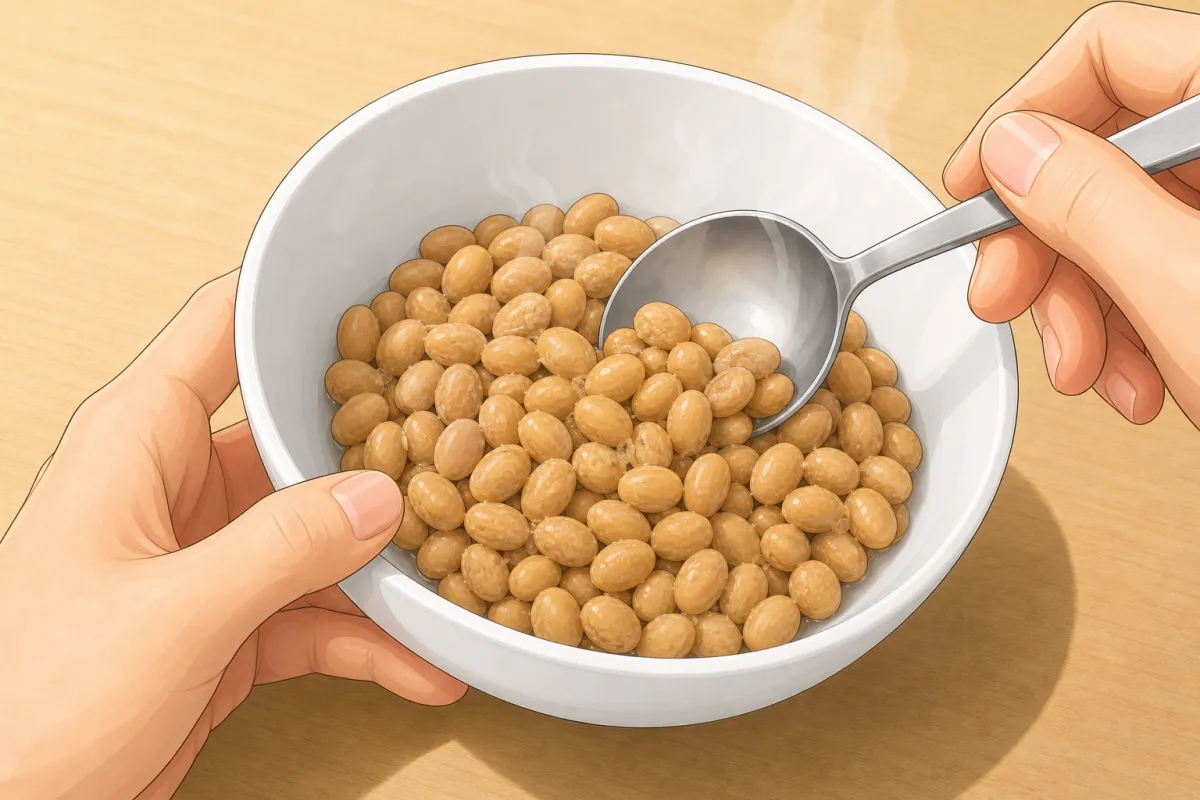
Spore water over the beans while they're still steaming hot; fold gently. 3Spores in while hot
5 minFor this step
- Natto spore powder1 packet scoop (see packet)
- Boiled water1 tbsp
- Meanwhile, scald the glass dish, a spoon and the tubs with boiling water. Natto bacteria crowd out most other microbes, but give them a clean start.
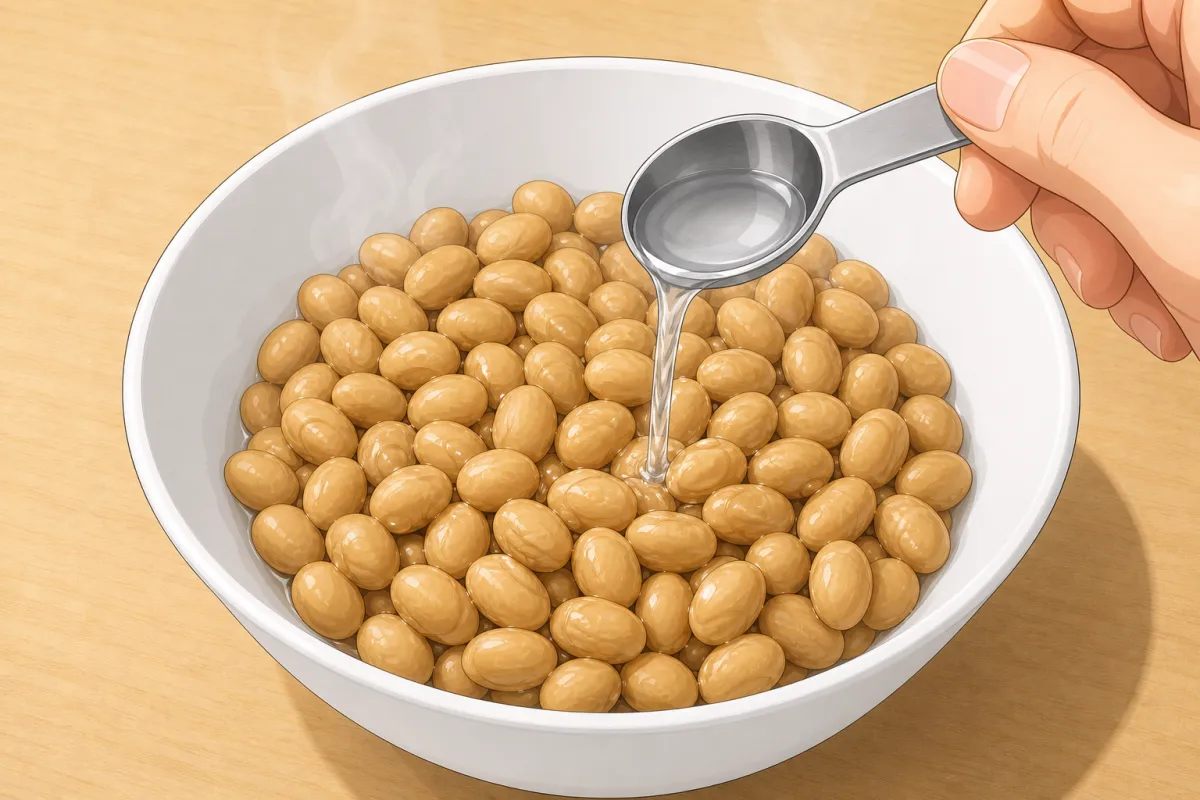
- Stir one scoop of spore powder into 1 tbsp of just-boiled water. Nattomoto's tiny scoop (0.1 g) is enough for up to 1 kg of dry beans, so one scoop is plenty here. Follow your packet if it says otherwise.
- Drain the beans well and, while they are still steaming hot, pour the spore water over and fold gently until every bean is coated. The spores survive the heat; the other microbes don't.
Should look like this 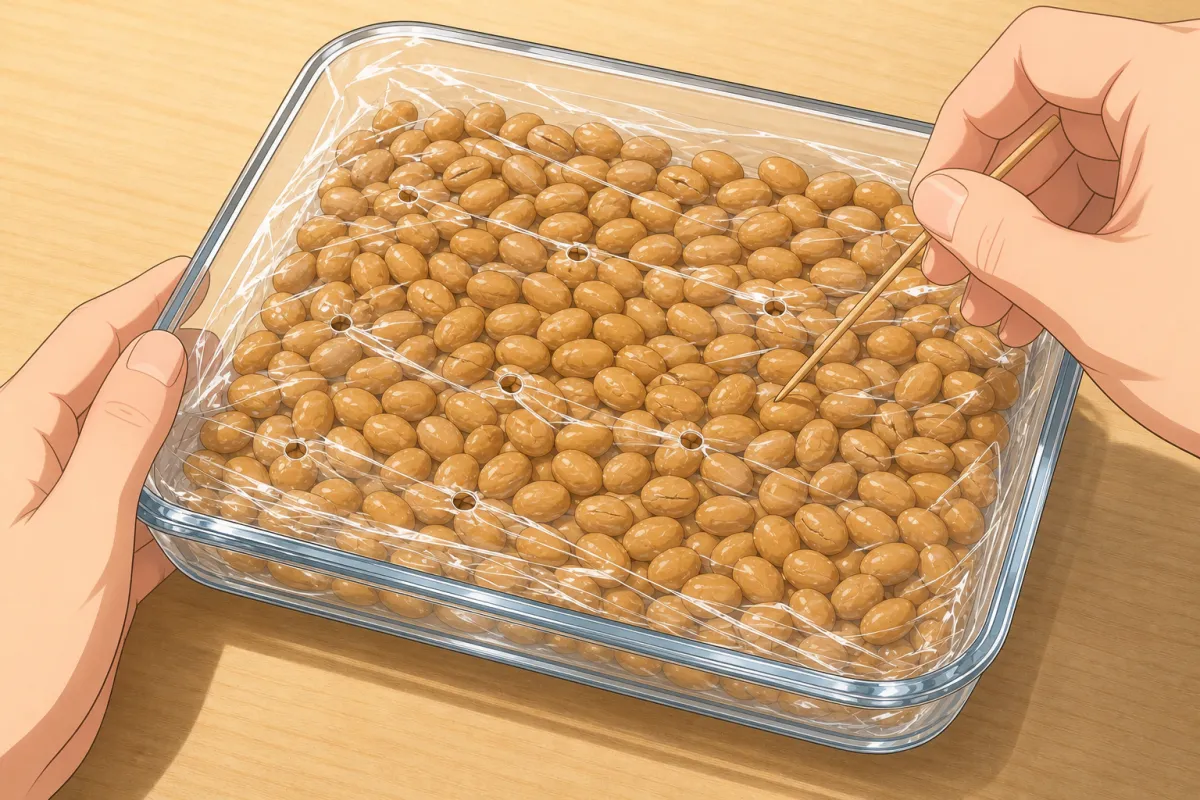
Film straight onto the beans; poke 10–15 holes with a skewer. 4Spread out and cover with holes
5 min- Spread the beans in the dish in an even layer no more than 2 cm deep. A deeper layer goes hot and smelly in the middle.
- Lay cling film straight onto the beans and poke 10–15 holes through it with a skewer. The bacteria need air; the film stops the top drying out.
- Lay a loose sheet of foil over the dish so condensation from the bath lid can't drip in.
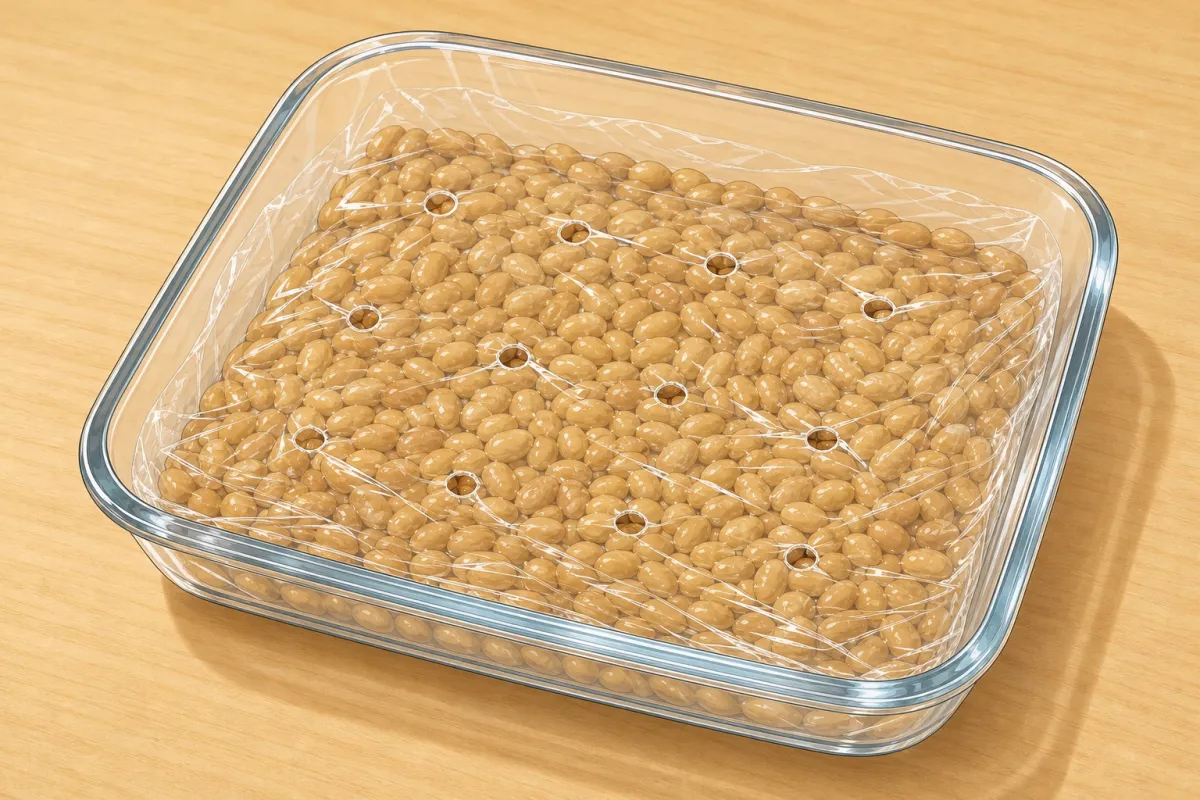
Should look like this 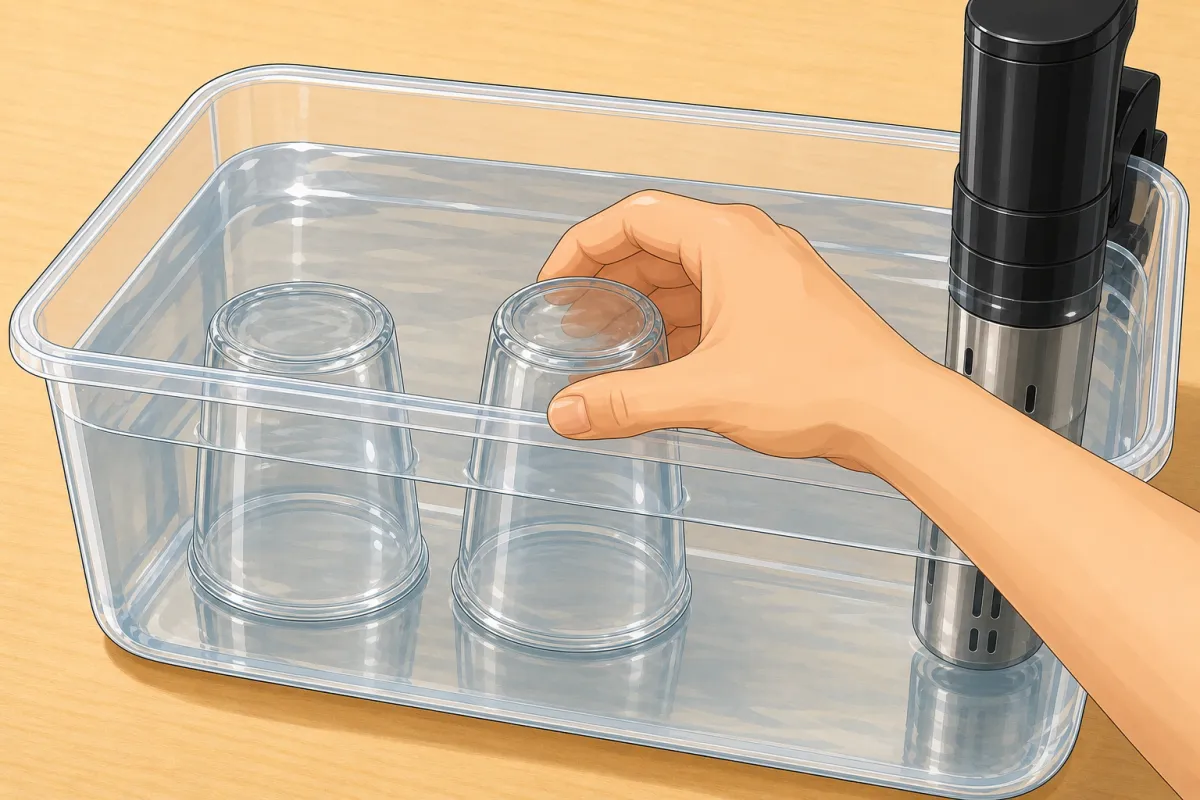
Two upturned glasses in the bath; water just below their tops. 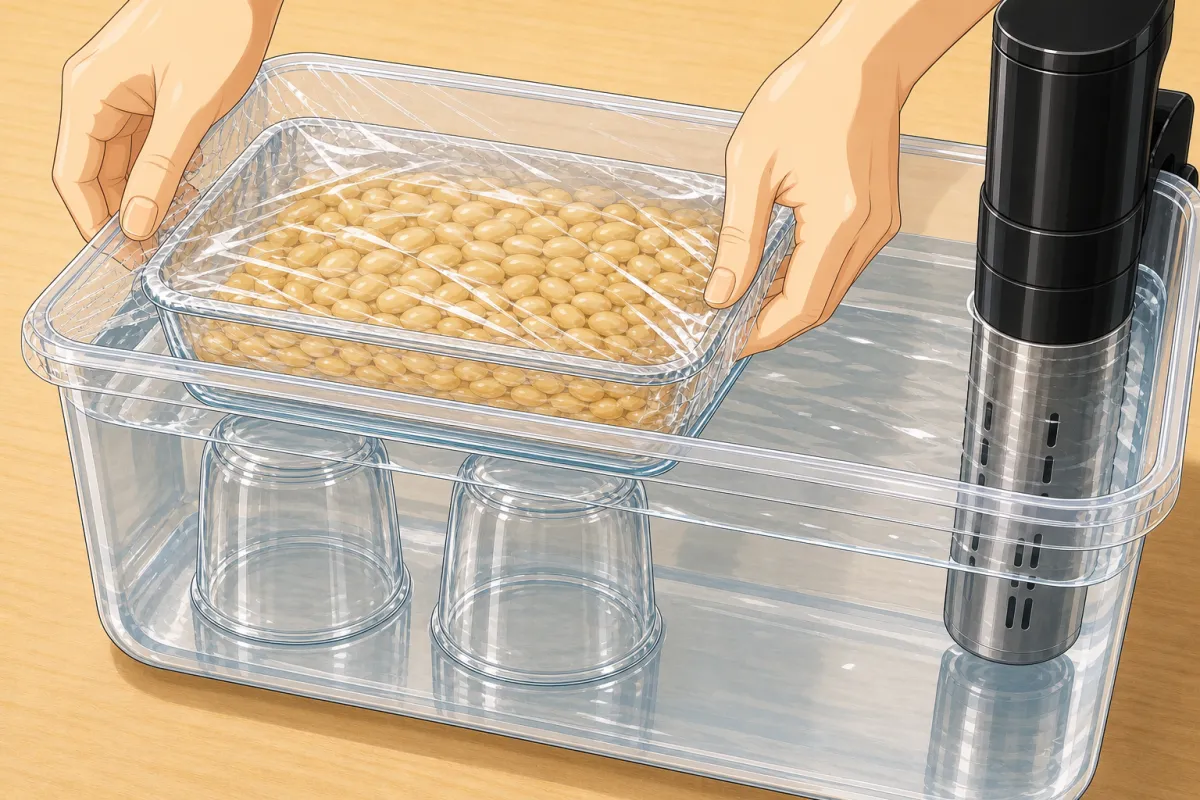
Dish on the glasses, then the whole bath covered. 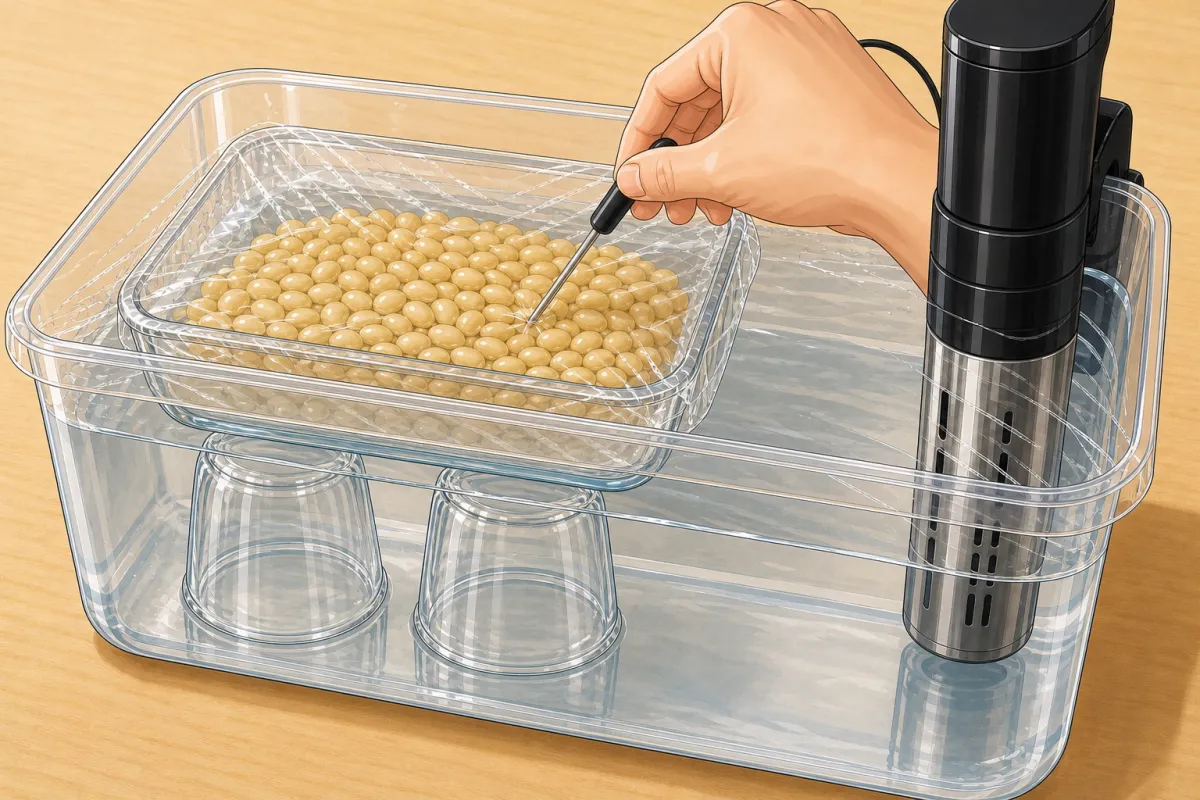
After an hour, probe the middle of the beans: 38–41°C. 5Hold at 38–41°C in the sous vide bath
22–24 h- Stand two heavy upturned glasses in the bath and fill it to just below the top of the glasses, above the circulator's minimum line. Set the circulator to 41°C.
- Set the dish on the glasses. The water may touch its base but must stay well below the rim, and it must not lean on the circulator.
- Cover the whole bath with its lid or cling film, so the air above the water stays warm and damp.
- After an hour, push the probe thermometer through the film into the middle of the beans. Aim for 38–41°C. If it's lower, raise the bath a degree or two, or add water so more of the dish sits in it.
- Leave it 22–24 hours. Check the water level once and top up with warm water.
Should look like this 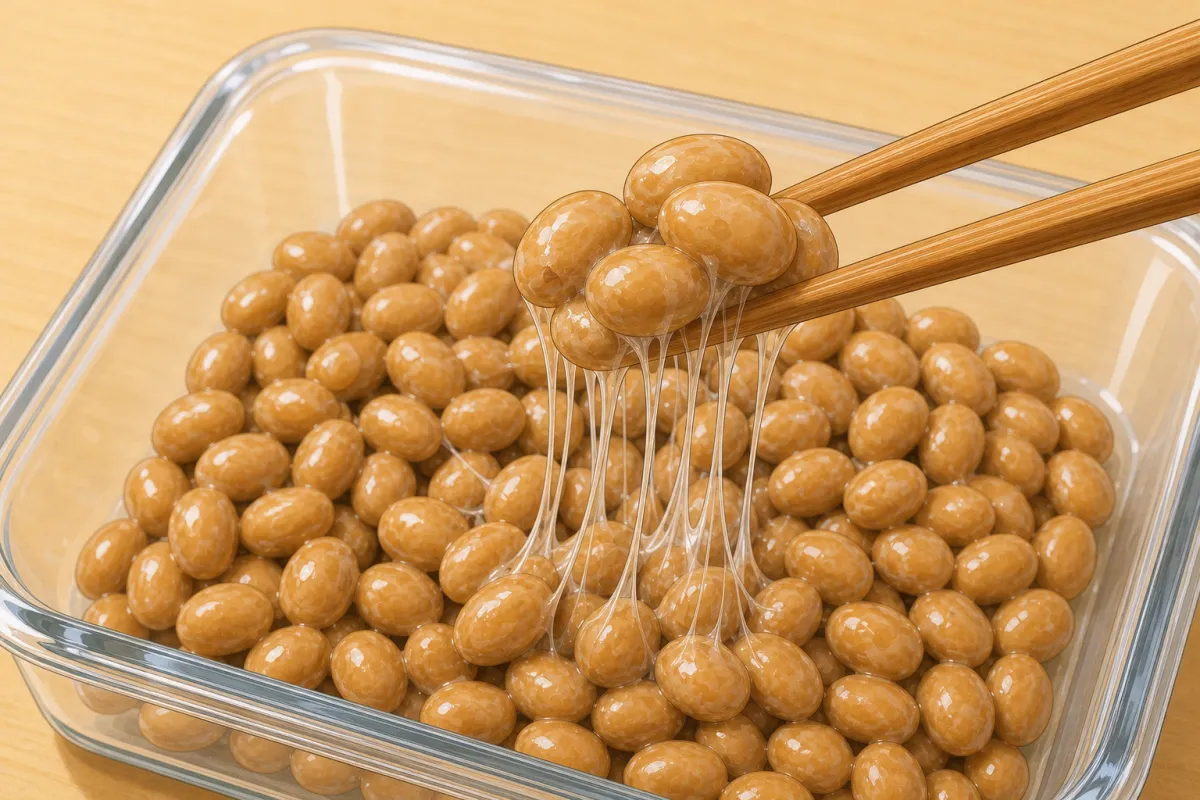
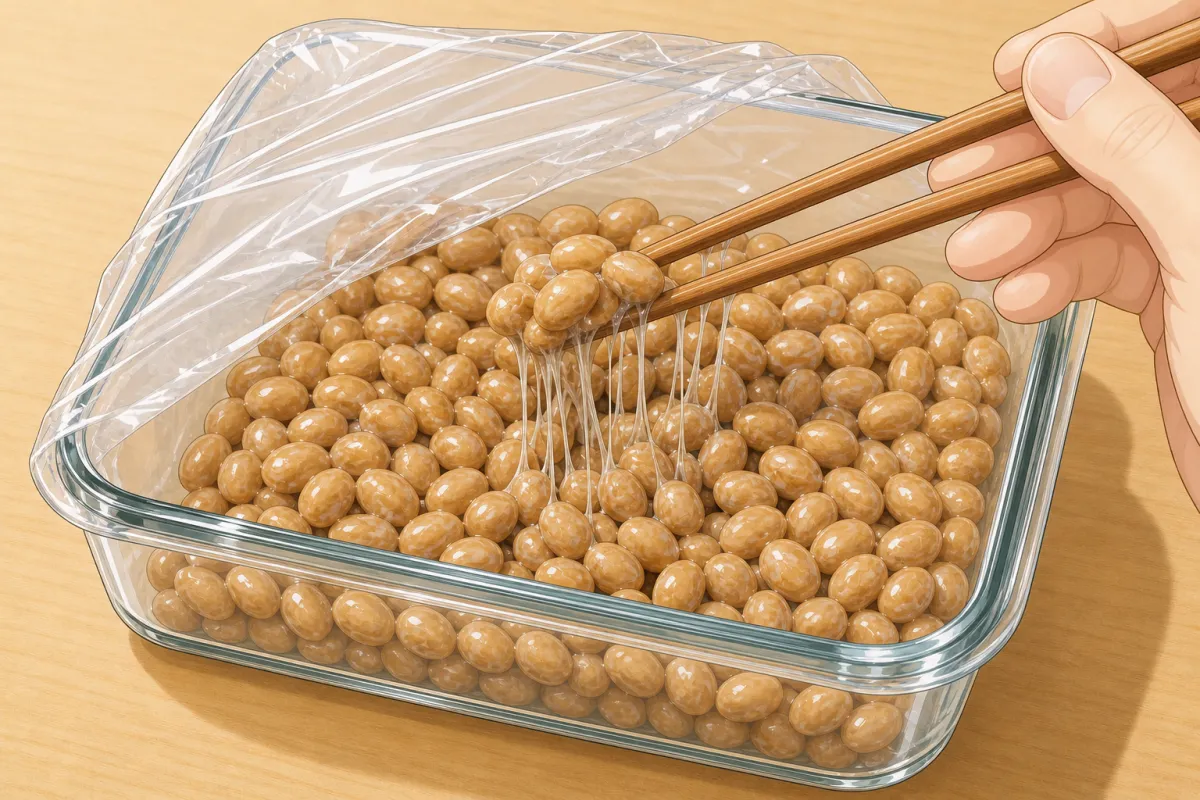
Stir a few: sticky strings should follow the chopstick. 6Check for strings
2 min- Lift the foil and film. The beans should have a thin white bloom and look a little darker. They smell earthy, a bit like ammonia.
- Stir a few with a chopstick. Fine, sticky strings should follow it.
- No strings yet? Cover and give it a few more hours. Pink, black or fuzzy coloured mould, or a rotten smell, means throw it all out.
Should look like this 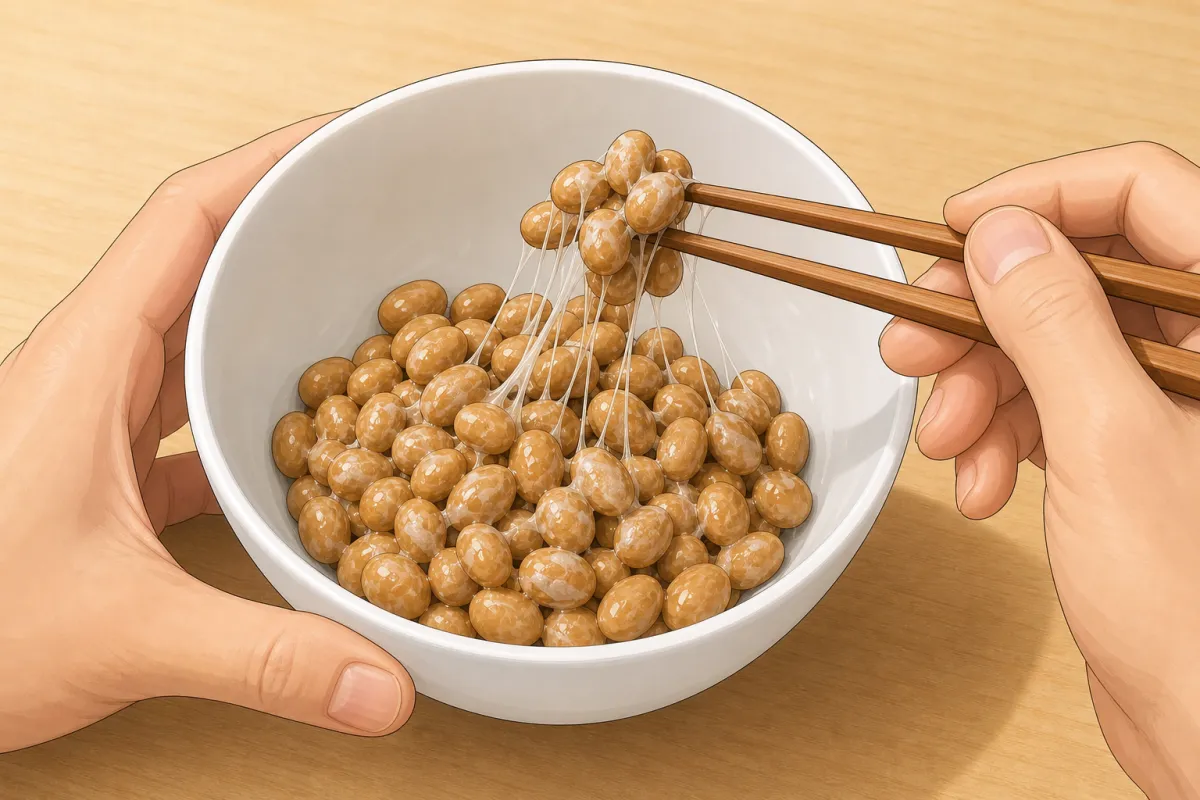
Stir hard 30–50 times before eating, until white and stringy. 7Cool, ripen, portion
24 hFor this step
- Soy sauce or the natto tare1 tsp
- Karashi mustarda dab
- Scallion1 tbsp
- Let the dish cool to room temperature, covered, about an hour.
- Fridge it for at least 24 hours. The ammonia fades and the strings get longer and stickier.
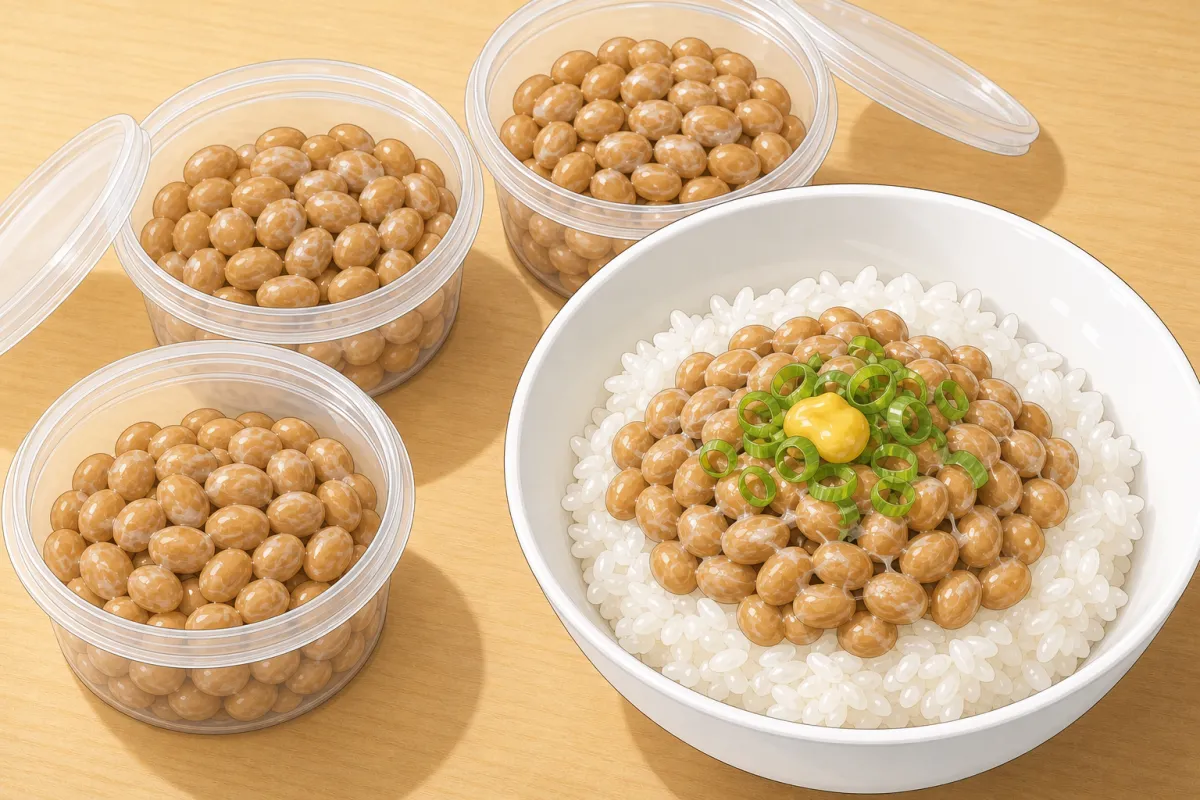
- Pack into 50 g tubs. Fridge up to a week, freezer up to two months; thaw overnight in the fridge.
- To eat: stir a portion hard with chopsticks 30–50 times until it's white and frothy with strings, add the soy and karashi, stir again, and pile it on hot rice with the scallion.
Should look like this
Based on: Takahashi Nattomoto — instructions (Natural Import) · Serious Eats — natto