Doenjang jjigae (soybean paste stew)
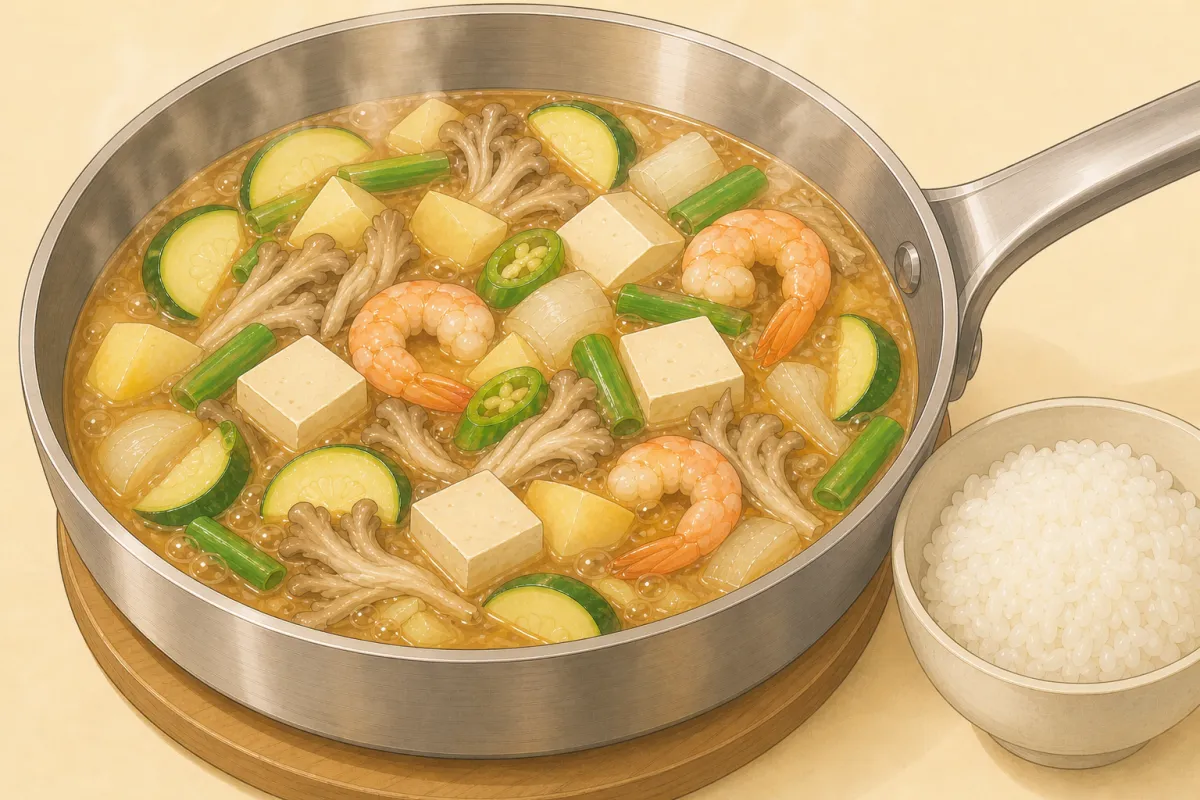
The everyday stew that comes with rice at a Korean table: deeply savoury from fermented soybean paste, not spicy unless you add the chilli. Cooked in a wide steel sauté pan with a lid (26–28 cm, sides 5 cm or more) instead of a clay pot. Stainless steel is fine with salty, fermented food. The lid stays on for most of the cooking because a wide pan loses liquid quickly. Use niboshi dashi if you have it. Shrimp, clams or cubes of beef are optional; vegetables and tofu alone make a complete stew. This is a home adaptation built from several Korean sources and has not been kitchen tested.
Plain-text recipe · expand & copy
Mise en place — set out in the order it goes in
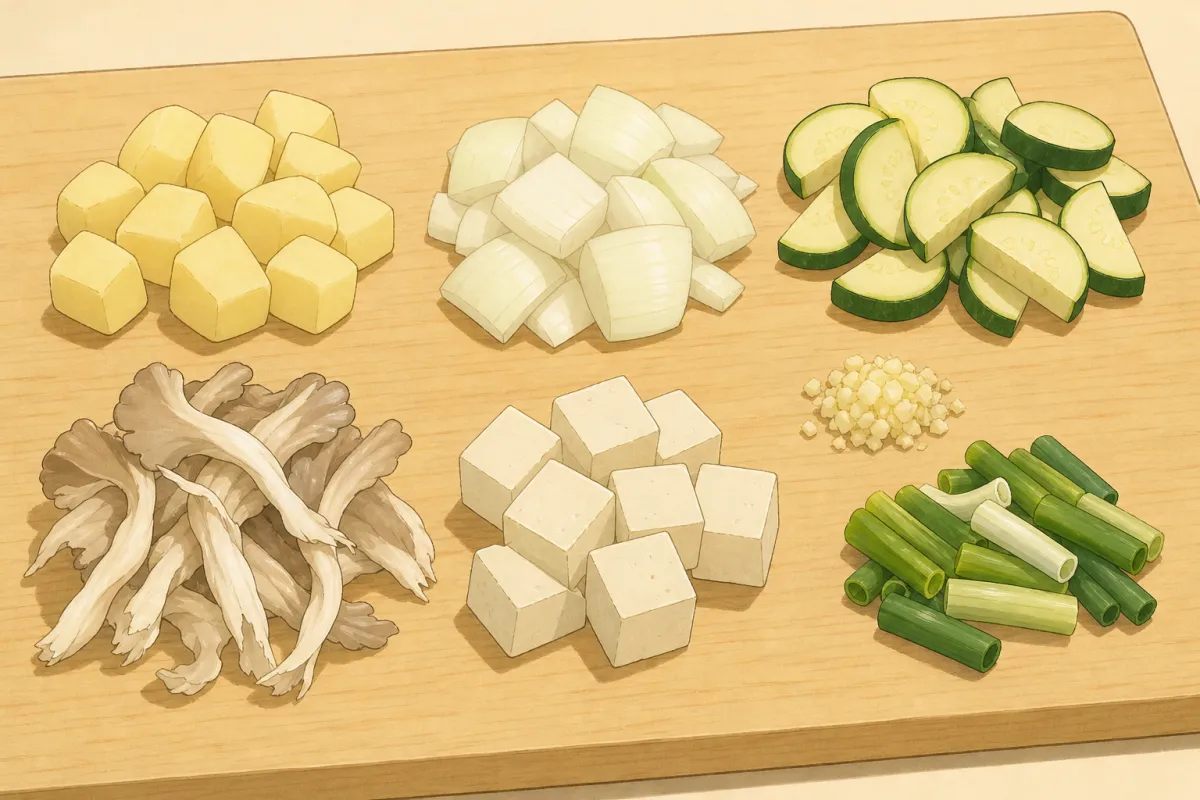
 Potato and onionpotato in 1.5 cm cubes · onion in 2 cm squaresStep 2
 Courgette, mushrooms, garlic
- courgette in 1 cm half-moons
- mushrooms torn or quartered
- garlic minced
 Tofu and proteintofu in 2 cm cubes · shrimp or clams, if usingStep 4
 Finishspring onion in 3 cm lengths · green pepper sliced on the diagonalStep 5
Step by step
1Cut everything to size
~10 minFor this step
- Potato1 small (120 g)
- Onion½ (80 g)
- Courgette½ (150 g)
- Mushrooms (oyster or button)100 g
- Firm tofu150 g
- Garlic2 cloves
- Spring onion1
- Mild long green pepper1
- Beef chuck120 g
- Peel the potato and cut it into 1.5 cm cubes. Cut the onion into 2 cm squares.
- Halve the courgette lengthwise and cut it into 1 cm half-moons. Tear oyster mushrooms into strips or quarter button mushrooms. Mince the garlic.
- Cut the tofu into 2 cm cubes. Cut the spring onion into 3 cm lengths and slice the green pepper on the diagonal.
- If using beef, cut it into 1.5 cm cubes, no thin slicing needed.
Press the paste through a sieve 2Dissolve the paste; simmer the potato
~8 minFor this step
- Niboshi dashi700 ml
- Doenjang (Korean soybean paste)2½ tbsp (45 g)
- Gochujang½ tsp
- Potato1 small (120 g)
- Onion½ (80 g)
- Beef chuck120 g
- Neutral oil1 tsp
- Heat / temperaturemedium-high, then medium
- If using beef: heat the oil in the pan on medium-high and brown the cubes for 2–3 minutes.
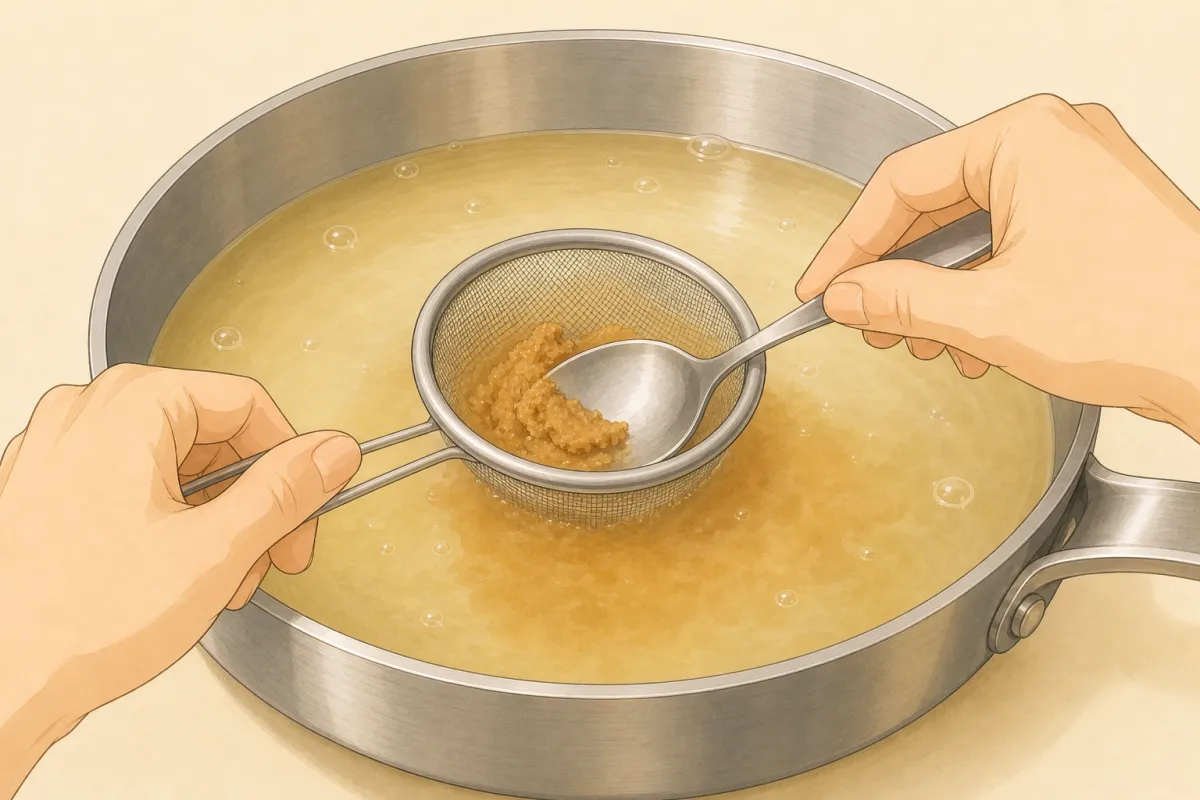
- Pour the dashi into the pan and bring it to a boil. Hold a small sieve or ladle in the dashi, put the doenjang (and gochujang, if using) in it and press it through with a spoon until no lumps are left.
- Add the potato and onion. Cover and simmer on medium for 6 minutes.
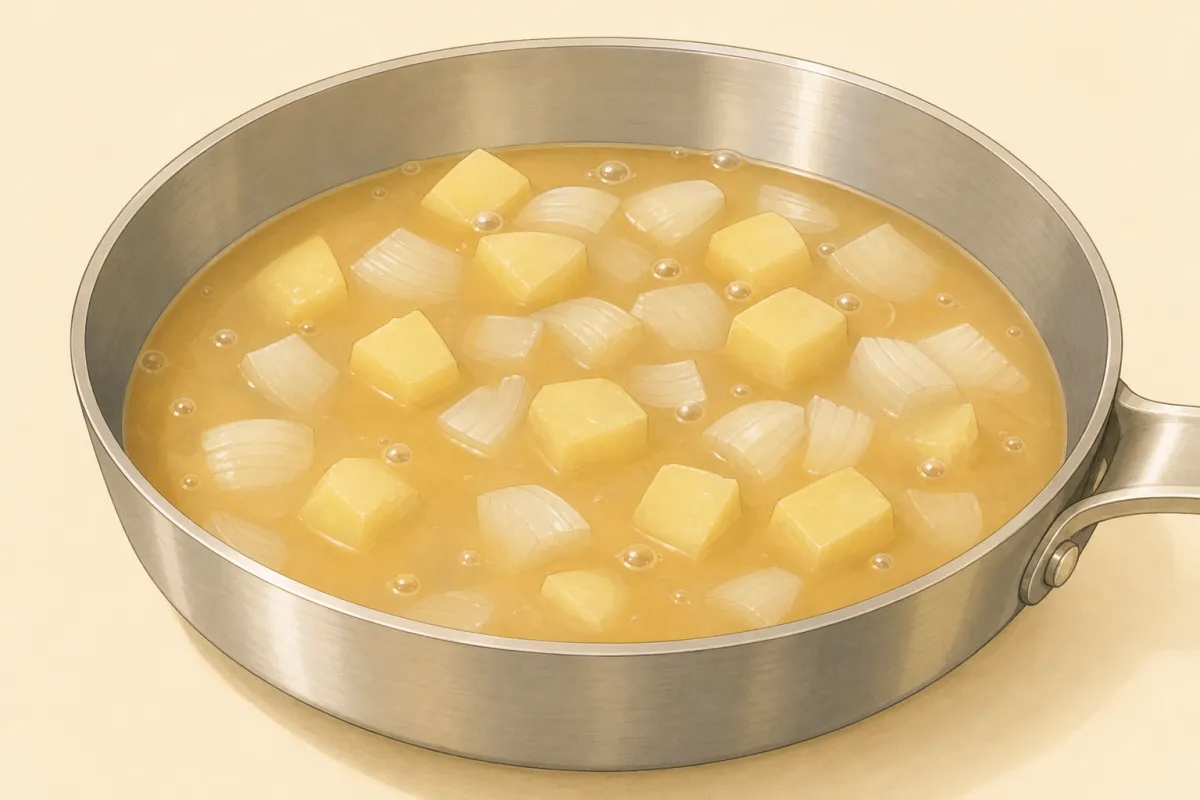
Should look like this 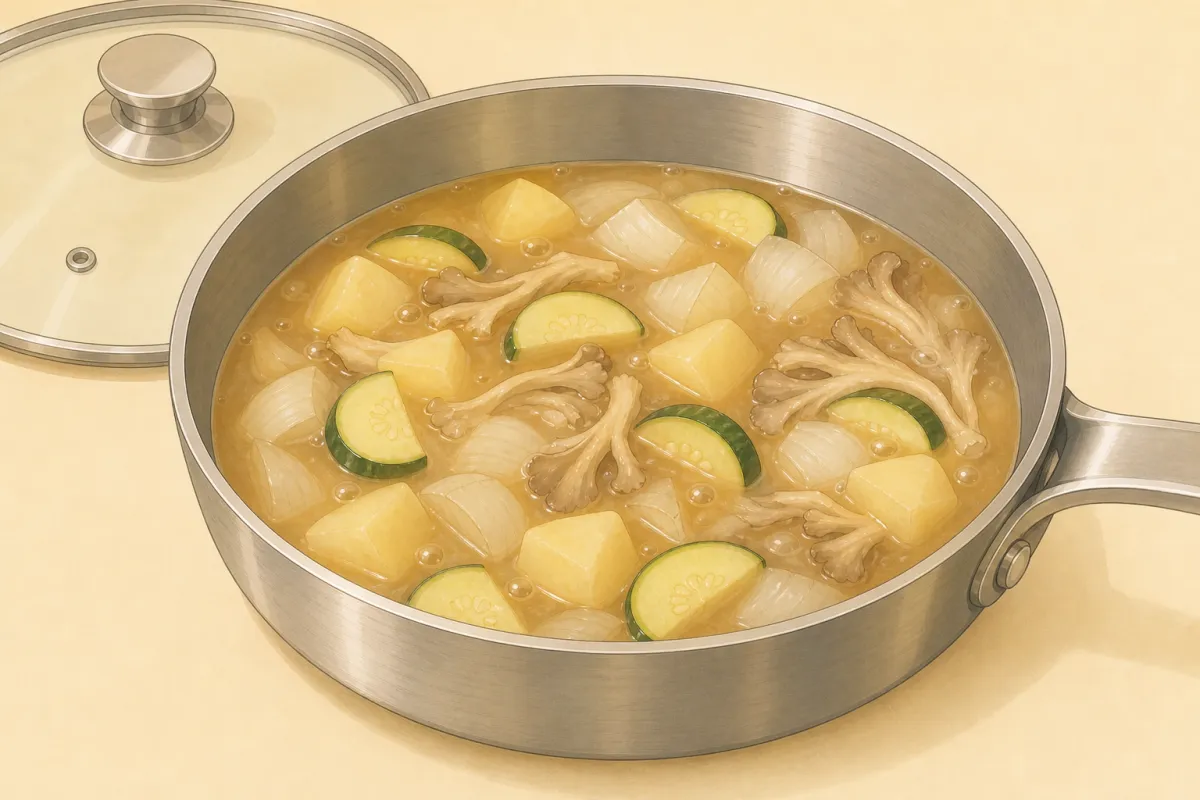
3Add courgette and mushrooms
4 minFor this step
- Courgette½ (150 g)
- Mushrooms (oyster or button)100 g
- Garlic2 cloves
- Heat / temperaturemedium
- Add the courgette, mushrooms and garlic. Cover again and simmer for 4 minutes, until the courgette is just tender at the edges.
- The liquid should still cover most of the vegetables. A wide pan loses liquid quickly, so top up with a splash of hot water if it has dropped below half.
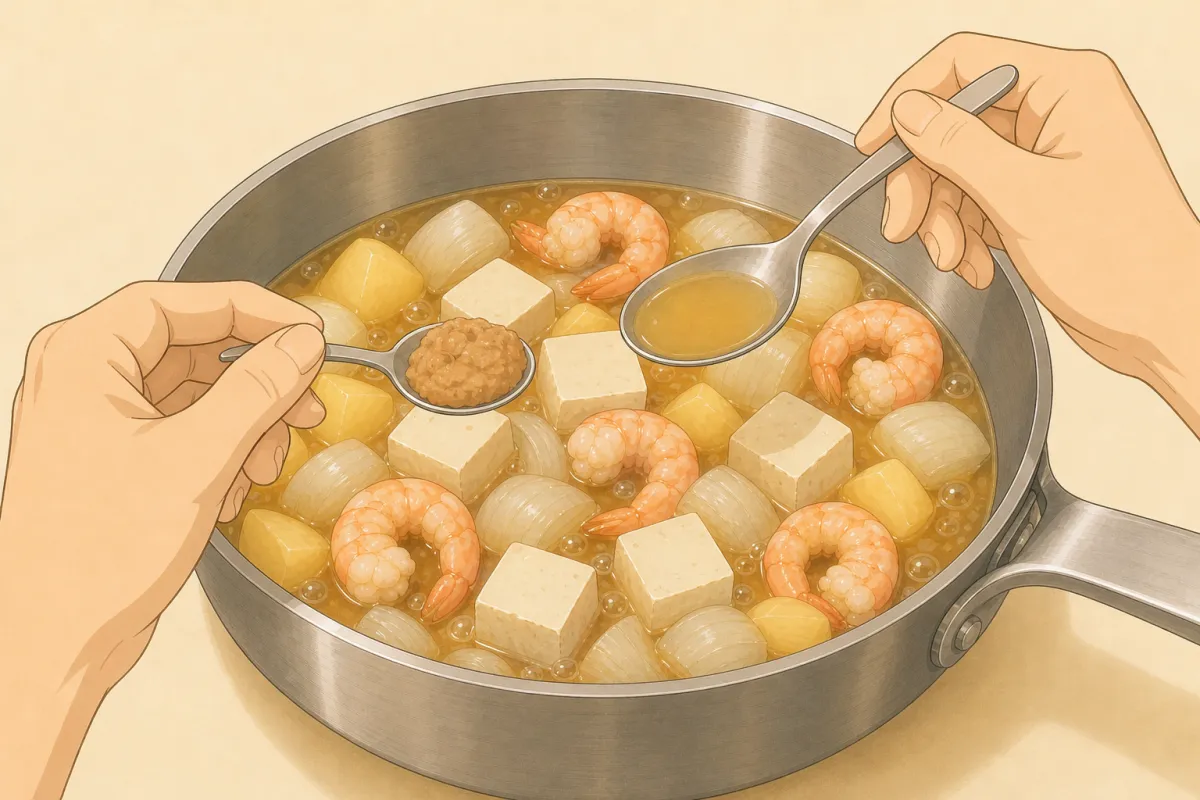
Taste and adjust 4Tofu and shrimp or clams; taste
2–3 minFor this step
- Firm tofu150 g
- Raw peeled shrimp8 (about 120 g)
- Clams, purged250 g
- Gochugaru½ tsp
- Heat / temperaturemedium
- Slide in the tofu and the shrimp or clams. Simmer uncovered for 2–3 minutes, until the shrimp turn pink or the clams open. Throw away any clams that stay shut.
- Taste the broth. Too mild: press in another teaspoon of doenjang. Too salty: add a little hot water. Sprinkle in the gochugaru now if you want gentle warmth.
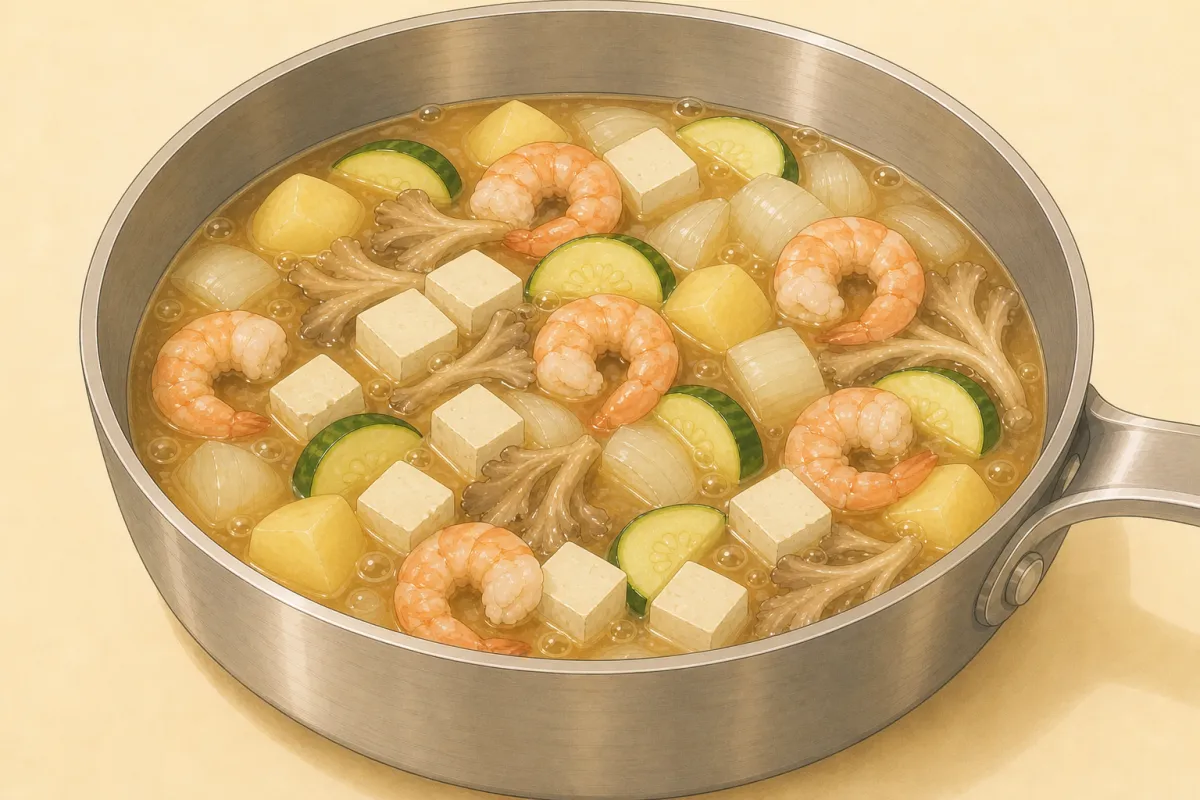
Should look like this 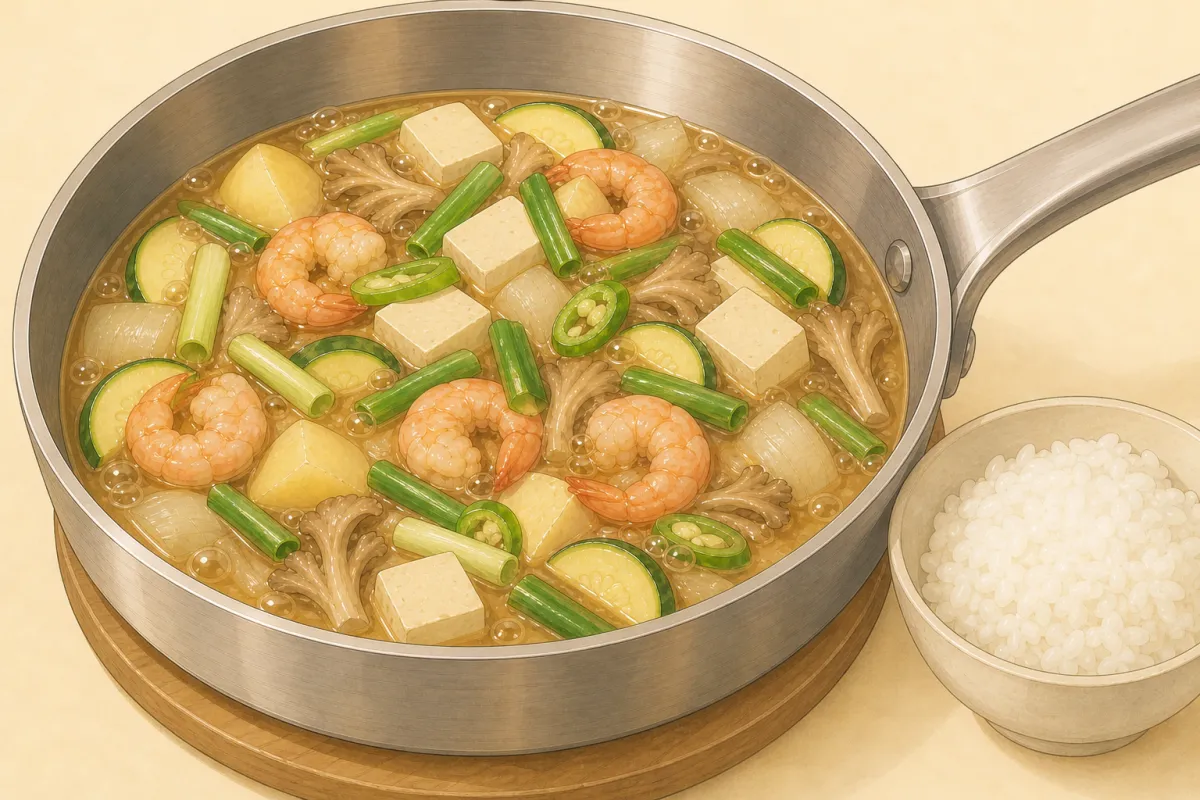
5Finish and serve from the pan
30 sFor this step
- Spring onion1
- Mild long green pepper1
- Heat / temperaturemedium
- Scatter the spring onion and green pepper over the top and simmer for 30 seconds.
- Bring the pan to the table on a trivet and eat with plain rice. Spoon the stew over the rice or eat it alongside.
Based on: Maangchi — doenjang jjigae · Korean Bapsang — doenjang jjigae